Google Pixel 4 users have reported that white balance algorithms are messing up the colour tone of photos, especially ones shot under red artificial lighting.
Samsung might use the unannounced Exynos 9830 and Snapdragon 865 chipsets on the upcoming Galaxy S11 series smartphones, according to code spotted in the latest release of OneUI 2.0 beta.
Mi CC9 Pro camera samples and specifications have been shared by Xiaomi, while the smartphone has been sighted on TENAA with key internal specifications.
Poco F1 users on social media have started reporting the receipt of MIUI 11 update. However, the update appears to be initially available to select users.
Apple has been rumoured to be launching a tile-like item tracker for months, now with the release of iOS 13.2 it appears that the device will be called "AirTag".
iOS 13.2 and iPadOS 13.2 are available for download on all iPhone, iPod touch, and iPad models compatible with iOS 13 and iPadOS 13, respectively. Apple has brought the anticipated privacy settings for Siri through the latest software updates.
Intel has filed an antitrust lawsuit against a SoftBank Group-owned investment company alleging the firm stockpiled patents to hold up technology companies with numerous lawsuits.
In our review of See Apple TV+ series — which stars Jason Momoa in the lead — we look at how terrible, surface writing leads to lacklustre plot, underdeveloped characters, and a show that has nothing to say. See TV series release date is November 1 on Apple TV+.
Redmi Note 7 and Redmi Note 7S users in India have posted screenshots on forums, confirming that they have started receiving the MIUI 11 update as well.
A new firmware update rolling out to the Samsung Galaxy S10 series adds new features like Auto Hotspot and slow-motion selfie videos, among other things.
Apple has now started warning iPhone 5 users to update their phones to the most recent software update before November 3, 2019, to ensure they don't lose access to key features.
Best phones under 7000: Redmi 8A and Realme C2 feature in our top picks of best mobile phones priced below Rs. 7,000. Other phones include the Infinix Note 5 as well as the Lenovo K9.
Best phones under 8000: Here are our top picks for best mobiles phones under Rs. 8,000. These include smartphones from Realme, Asus, Xiaomi, and Infinix.
One prequel, focused on the heyday of the dragon-riding Targaryens, will go straight to series. Another, set in the earliest years of White Walkers, appears dead.
Google parent Alphabet reported quarterly results on Monday that show costs continue to rise faster than revenue as the Web search leader seeks to broaden its business.
Google parent Alphabet reported quarterly results on Monday that show costs continue to rise faster than revenue as the Web search leader seeks to broaden its business.
Google parent Alphabet reported quarterly results on Monday that show costs continue to rise faster than revenue as the Web search leader seeks to broaden its business.
Google parent Alphabet reported quarterly results on Monday that show costs continue to rise faster than revenue as the Web search leader seeks to broaden its business.
Microsoft has relaunched its Xbox All Access subscription offering. Xbox All Access lets you buy an Xbox One console in increments over the course of two years. And while you’re paying it off you’ll also have access to Xbox Pass Ultimate.
In August 2018, Microsoft launched Xbox All Access. This enabled gamers who didn’t have the necessary funds to buy an Xbox One outright the chance to purchase one in instalments. Now, Xbox All Access is back, and with a next-gen sweetener added.
What Do You Get With Xbox All Access?
Microsoft revealed the new-look Xbox All Access in a post on Xbox Wire. Xbox All Access gets you an Xbox One console, an Xbox Wireless Controller, and a 24-month membership to Xbox Pass Ultimate (which combines Xbox Live Gold and Xbox Game Pass).
You pay over the course of two years, with the cost depending on which flavor of Xbox One you choose and which country you’re in. In the US, Xbox All Access starts at $19.99/month for the Xbox One S. The program is also available in the UK and Australia.
Introducing Xbox All Access. A new way to purchase an Xbox One without having to pay the total cost at once and still have the ability to upgrade ?
? Similar to how you sign up for a phone contract
? No upfront cost
? Xbox Game Pass included
? Upgrade to Project Scarlett pic.twitter.com/rN5L8ObIC8
Microsoft has relaunched Xbox All Access at a time when most people have one eye on the next generation of consoles. Which is why the company has included the option to upgrade to Project Scarlett once it launches in Holiday 2020.
You can join the program by visiting a participating retailer. Which in the US is exclusively Amazon. If you’re approved for the financing you’re good to go. Xbox All Access is available from Oct. 29 (Australia), Nov. 5 (UK), and Nov. 18 (US).
Looking Forward to Project Scarlett
If you run the numbers then this is a pretty sweet deal. You’ll actually save money compared to buying a console outright and paying for Xbox Pass Ultimate for the next two years. And you’ll have the chance to upgrade to Project Scarlett.
At the time of writing we don’t know much about Project Scarlett. Except that it’s Microsoft’s next-gen console launching in Holiday 2020. However, Sony has shown its hand earlier, and here’s everything you need to know about the PlayStation 5.
It’s common knowledge to keep your credit card safe from fraud, but how does it work? How do hackers get your card details in the first place?
Let’s explore how scammers do credit card frauds, and how you can stay safe.
How Hackers Get Your Credit Card Number
For a scammer to do credit card frauds, they first need all the necessary details. There are several ways they can get these details, and they range from the very basic to the more technologically complex.
Getting Details via Phishing
Phishing is an old strategy that is still effective today. The scammer gets in touch with you via phone or email, usually posing as your credit card issuer. From here, they can talk you into giving them your credit card information.
It sounds like something you’d be able to spot right away, but some phishers are very skilled. This is very similar to the tactic that was used in the British phone-hacking scandal a couple of years ago. Thankfully, you can learn how to spot a phishing email, so be sure to study up before you become a victim!
Gleaning Details From Database Leaks
Scammers also get credit card details from online data breaches. Hackers have successfully breached big-names like Target, Home Depot, and the PlayStation Network in the past. These companies tend to have saved payment information listed under each customer, which scammers can use for fraud.
The numbers stolen from those sites often end up on “carding” shops, where people go to buy stolen credit card numbers for use online. ZDNet mentions how some accounts sell for as little as $5 on the dark web. This makes it easy for thieves to buy hundreds of cards at a time, potentially including yours.
Monitoring Your Inputs With Keyloggers
If a hacker manages to get a keylogger or another type of malware installed on your computer, they could quickly steal your credit card information when you use it for online shopping. The silent nature of keyloggers makes them particularly nasty, so be sure to protect yourself against keyloggers as much as possible.
These days, credit cards have NFC scanning built-in. NFC is also known as “contactless,” and it’s when you place the card up against the payment terminal to buy something.
Scammers can use devices that act like these payment terminals. When they pass close by to someone with a credit card in their pocket, the skimmer makes a fraudulent payment to the card. The victim may not even realize this has happened until they notice odd fees on their statement.
How Scammers Use Your Credit Card
Once a thief has your credit card, the hardest part is complete. Now all they need to do is use it or sell it on. The credit fraud they choose depends on their ulterior motive behind why they stole the details in the first place.
Making Contactless Payments
Contactless payments with cards don’t require PINs or signatures, so they’re perfect for credit card thieves. Even though the limits for contactless payments are rather small, they add up quickly. Online payments don’t require PINs or signatures ether, so going on an Amazon shopping spree with a stolen card is remarkably easy.
Fortunately, there are constraints for the scammer. The upper limit of a credit card will stop them from spending too much. On top of this, credit cards typically allow a set amount of contactless payments before it asks for a PIN. These restrictions mean the scammer can perform only a small shopping spree before they’re locked out without a PIN.
Selling the Card Online
If the hacker doesn’t want to “dirty their hands” with a stolen credit card, they sell the details online. These credit card markets thrive on the dark web, where all kinds of identifying information is up for sale. Sellers need to keep their practices under wraps to protect their business from law enforcement, and the dark web gives them the protection they need to operate.
If the hacker has enough information to make large purchases with the cards, they can buy goods and sell them on the black market. This is safer for them, as it hides their tracks better than if they transferred money directly into their bank account.
Scammers will typically buy gift cards. They can then sell these cards on the black market for less than face value. For instance, a $100 gift card will sell for $60. This makes them highly desirable for buyers and gives the scammer a way to wash their hands of the evidence.
How to Protect Yourself From Credit Card Fraud
There’s a lot a scammer can do with a credit card. As such, it’s important to keep yours secure. By following a few guidelines, you can decrease the chances you’ll encounter credit card fraud.
Don’t Share Credit Card Information Freely
First, don’t share your card information over the phone or in an email. Credit card companies, banks, and stores won’t randomly ask for your credit card information. If someone asks for them out of the blue, exercise extreme caution. If you need to share your information over the phone, be sure that no one is around to overhear you.
Keep Track of Data Breaches
Second, pay attention to online security news. If a service you use suffers a database breach and leaks payment information, contact your bank immediately.
You could wait to see if you get any suspicious charges on your account before alerting your bank, but this is risky. For example, ABC News reported on how the Bank of America fraud department can be hard to convince that a scam occurred in the first place. Waiting for fraud to happen may result in lost money that you have to wrestle back.
Protect Your Card’s RFID
Third, consider buying an RFID-blocking wallet, so your card is protected while it’s in your pocket. By blocking RFID signals, the wallet prevents any device from reading the information on your card until you take it out to use it.
Double-Check Payment Points
Fourth, be careful with where you insert your credit card. Scammers can operate at ATMs, pay-at-the-pump gas stations, small stores, and restaurants. If the payment terminal looks weird somehow, use another method to pay. Make cash withdrawals from within your bank, pay at the counter when you buy gas, and don’t let your card out of your sight.
Keep Tabs on Your Records
Finally, make sure to monitor your credit card statements, bank statements, and credit reports. The earlier you catch a potentially fraudulent transaction, the better. These days, you can get a credit report for free without harming your score. This makes it easier to spot any weird purchases and quickly report them.
Staying Safe With Payment Cards
Credit cards are a hot commodity for scammers. From small NFC skims to large-scale gift card selling, there are multiple ways they can make use of your details. Keep them safe to avoid headaches in the future!
Jio All-in-One plans, first Redmi Note 8 Pro and Redmi Note 8 sales, WhatsApp Group Privacy settings update, Moto G8 Plus India launch, Redmi K20 update rollout, and other top tech news of the week.
Redmi 8 is all set go on sale once again via Flipkart, Mi.com, and Mi Home Stores today. Redmi 8 price is set at Rs. 7,999 for the 4GB RAM variant, as a part of a promotional offer.
Facebook's artificial intelligence (AI) research team has developed a tool that tricks the facial recognition system to wrongly identify a person in a video, the media reported.
Flipkart has hosted its Festive Bonanza sale to offer deals and discounts on popular smartphones such as Redmi K20 Pro, Poco F1, Samsung Galaxy A50, Google Pixel 3a, and iPhone 7 Plus, among various others.
In a leaked video, Sundar Pichai admits at an all-hands that Google is “genuinely struggling” with employee trust as it defends the hiring of former DHS official.
Reliance’s new digital services company - which also includes Jio's news, movie and music apps - will also acquire Reliance's equity investment of Rs. 65,000 crores in Jio.
Vodafone Idea said on Friday it will ask the central government for relief on payments of at least $4 billion after a court ruling required it to pay overdue levies and interest.
Flipkart has hosted its Festive Bonanza sale to offer deals and discounts on popular smartphones such as Redmi K20 Pro, Poco F1, Samsung Galaxy A50, Google Pixel 3a, and iPhone 7 Plus, among various others.
Moto G8 Play price is set at BRL 1,099 (roughly Rs. 19,300) and Moto E6 Play price is set at EUR 108 (roughly Rs. 8,500). Both phones come in sole 2GB RAM + 32GB storage configuration.
Redmi Note 8 is priced starting just below Rs. 10,000 and claims to deliver everything you could possibly want or need. We review the Xiaomi Redmi Note 8 to find out if it delivers.
The increase in the spotting of Raccoon Stealer has been attributed to its aggressive marketing to potential criminals, easy-to-use automated backend panel, and 24/7 support from authors.
Google Pixel 4 XL iFixit teardown shows there are adhesives and Torx screws covering the internals. The phone has received a repairability score of 4 out of 10.
Airbnb is betting on women in India opening up their homes to travellers, especially millennials, to fuel its growth in the country, a senior company executive told Reuters.
French media firms said Thursday that they would drag Google before the country's competition regulator over its refusal to compensate them for displaying their content in defiance of a strict new EU copyright law.
Airtel and Vodafone Idea, among other telecom firms will now have to shell out huge past dues to the Department of Telecom (DoT) following a Supreme Court order on Thursday.
The futuristic door handles on Tesla's Model S are being blamed for a fatal crash in which a police officer was unable to pull a man to safety from his burning car.
Huawei has announced it has shipped 200 million smartphones in 2019 (handsets shipped till date) globally, in a record time despite the US trade ban. The Chinese technology giant shipped these 64 days earlier than the shipment milestone in 2018.
Google Pixel 4 XL iFixit teardown shows there are adhesives and Torx screws covering the internals. The phone has received a repairability score of 4 out of 10.
Huawei has announced it has shipped 200 million smartphones in 2019 (handsets shipped till date) globally, in a record time despite the US trade ban. The Chinese technology giant shipped these 64 days earlier than the shipment milestone in 2018.
Google notes that Samsung accelerated its rollout timeline this year, and announced an open beta for Android 10 on compatible devices and started the rollout on October 12, compared to November 15 last year.
Google Pixel 4 is now caught with an issue that impacts their 90Hz screen refresh rate under low brightness conditions. Google has promised a software update to bring a more stable experience.
The Moto G8 Plus is tipped to sport a triple rear camera setup with a 48-megapixel main sensor, a 16-megapixel wide-angle camera, and a 5-megapixel depth sensor.
Huawei Mate XS will sport a foldable design similar to the Mate X and come with the HiSilicon Kirin 990 SoC, the company announced at an event in China on Wednesday.
Realme India CEO Madhav Sheth has revealed that a tweaked version of ColorOS 7 update with near stock Android experience will roll out exclusively to Realme phones.
Huawei started taking orders on Wednesday in China for its eagerly awaited foldable smartphone, as it ramps up marketing at home to make up for weak overseas sales amid US trade sanctions.
Intel has filed an antitrust lawsuit against a SoftBank Group-owned investment company alleging the firm stockpiled patents to hold up technology companies with numerous lawsuits.
Amazon and Flipkart are in the middle of their Diwali sales. You can buy a smartphone at just about any price point at a discounted price and match it with bundled offers.
Redmi Note 8 Pro and the Redmi Note 8 will next go on sale on October 25 via Amazon, Mi.com, and Mi Home stores across the country today. Redmi Note 8, Redmi Note 8 Pro sales will kick off at 12pm (noon).
Xiaomi has announced its next round of Diwali with Mi sale in India to bring discounts on Redmi K20, Redmi K20 Pro, Redmi Note 7 Pro, Poco F1, and other smartphone models.
Apple has started selling its popular iPhone XR phones assembled in India, as it looks to expand its share in the world's second-largest smartphone market.
Apple's anticipated AR headset with a dedicated App Store will arrive in 2020, reports Bloomberg. The company is also said to have a new iPhone in the plans that would sport a 3D camera setup.
Apple's anticipated AR headset with a dedicated App Store will arrive in 2020, reports Bloomberg. The company is also said to have a new iPhone in the plans that would sport a 3D camera setup.
Redmi Note 8 Pro is the successor to the popular Redmi Note 7 Pro, but is it good enough to take the name forward? We put it through the test in our review to find out.
The Model 3-based crossover is going to hit production some six months sooner than expected, but we'll have to see if it'll live up to the hype of its progenitor.
Huawei has confirmed that the US sanctions were hurting it badly, especially the absence of Google's core Android software, Play Store and popular apps like Search and Maps on its devices.
Vivo Y3 price is set at CNY 999 (roughly Rs. 10,000) for the 4GB RAM + 64GB storage variant, while its existing 4GB RAM + 128GB storage option carries a price tag of CNY 1,498 (roughly Rs. 15,000).
Huawei’s sub-brand Honor is planning to launch its Honor 9X smartphone in India by the end of 2019, the company’s Country President Charles Peng has said.
Huawei Nova 5z price is set at CNY 1,599 (roughly Rs. 16,000) for the 6GB RAM + 64GB storage configuration, while its 8GB RAM + 128GB storage option is priced at CNY 1,799 (roughly Rs. 18,000).
Amazon Great Indian Festival sale is back in a Diwali Special avatar this week to take on Flipkart's Big Diwali Sale. We've handpicked the best offers you can grab today.
Flipkart Big Diwali Sale 2019 has returned with a set of interesting deals and offers. We've handpicked the best offers you can grab on the first day of the sale.
Apple is expected to launch a 16-inch MacBook Pro model sometime this year. In the latest macOS Catalina beta update, images have been spotted that resembles a slightly bigger MacBook Pro model.
Flipkart Big Diwali Sale 2019 has returned with a set of interesting deals and offers. We've handpicked the best offers you can grab on the first day of the sale.
Well, not the real Middle-earth, but the place that stood for it in The Lord of the Rings films could get a 17-hour flight from Newark's airport in New Jersey.
Adobe has launched a new Alexa Skill it hopes will help boost your creativity. It’s called the Adobe Inspiration Engine, and it delivers inspirational quotes and creative exercises designed to get your creative juices flowing when the tap seems to be stuck.
When Your Creative Juices Stop Flowing…
Creative block can hit the best of us. Whether you’re a writer, an artist, a photographer, or a designer, there are times when your creative juices stop flowing. This can be upsetting, especially if you have no idea when they’ll start flowing again.
There are various techniques to boost your creativity. Whether it’s taking a break, drinking some coffee, or using these creative block-breaking apps. But now you have another option thanks to Adobe’s new Alexa Skill called the Adobe Inspiration Engine.
How to Use the Adobe Inspiration Engine
Adobe unveiled the Adobe Inspiration Engine on The Adobe Blog. The Adobe Inspiration Engine sprang from the company’s desire to “empower people to realize their creative potential”. Its products offer practical solutions, but this could play a supporting role.
The Adobe Inspiration Engine comprises three components: Insightful quotes from creatives such as Jessica Walsh and Pascal Campion, creative exercises voiced by Calob Castellon and Elise Swopes, and a creative quiz to help you understand your own mind.
To enable the Adobe Inspiration Engine from the Amazon Alexa Skill store, just say, “Alexa, enable the Adobe Inspiration Engine.” Then, when you need to get a hit of inspiration to boost your creativity, say, “Alexa, open the Adobe Inspiration Engine”.
The Adobe Inspiration Engine is available right now for free in the US, the UK, Canada, Australia, and New Zealand. You can use it with any Alexa-enabled device, including the Echo Show, or the Alexa app on your smartphone or tablet.
The Best Amazon Alexa Skills Worth Using
There are thousands of Alexa Skills available to download beyond the Adobe Inspiration Engine. Some free, some paid, some good, some bad. To help you sort the wheat from the chaff, we’ve compiled a list of the best free Alexa Skills for Amazon Echo owners.
Plex has cemented itself as the best software for managing your media library, streaming content to the various screens in your home, and watching your videos remotely when you’re on-the-go.
To run Plex, you need two things—a server and a client. The server is responsible for hosting your content and sending it to other screens; the client is the app that allows you to access and watch your media on those screens.
So, which devices are the best Plex clients for streaming media? Let’s take a closer look.
The Nvidia Shield is the best Plex client that money can buy. It’s blazingly fast, packed with best-in-class hardware, and can handle any task you throw at it.
The device is a set-top box. You need to connect it to your TV using an HDMI cable. The box runs Android TV, supports 4K video at 60 frames per second (FPS), and offers Dolby Atmos audio. Under the hood, the Nvidia Shield has an Nvidia Tegra X1 processor, 16GB of storage, 3GB of RAM, and a 256-core GPU.
It also comes with Google Assistant and Alexa compatibility. And if the 16GB isn’t enough for your needs, you can use USB storage or an external hard drive by connecting the extra memory to one of the two USB ports.
The other premium device you can use as a Plex client is the Apple TV 4K box. Even though it’s more expensive, we recommend the newer 4K version to make sure that you future proof your purchase.
The Apple TV 4K supports Dolby Vision and HDR10 video, and has Dolby Digital surround sound. Inside the device, there’s an A10X Fusion chip with 64-bit architecture. The box is available in 32GB and 64GB versions.
However, an Apple TV box has a few drawbacks compared to Nvidia’s product. Firstly, because it’s made by Apple, it is far less customizable. Secondly, there are no USB ports; you cannot expand the memory with external devices. Finally, it only offers Siri—there’s no Google Assistant or Alexa.
If the Nvidia Shield and Apple TV 4K are out of your price range, you should consider the Amazon Fire TV Stick 4K. It’s the best Plex client for people who are on a budget. Despite the lower price point, however, the Fire TV Stick 4K is still a highly capable streaming device. It supports Dolby Vision and HDR10 video, along with Dolby Atmos audio. The stick comes with 8GB of storage and a quad-core processor.
When setting up a Plex client, it is always preferable to connect your set-top box or streaming stick directly to your modem; you’ll enjoy a faster and more reliable experience. Sadly, unlike the Nvidia and Apple devices, the Amazon Fire TV Stick 4K does not have a built-in ethernet port. You will need to purchase the official Amazon Ethernet Adapter separately. This will add around 30 percent to the overall cost.
Another cheap device that can be deployed as a Plex client is the Raspberry Pi 4. Unlike the other three Plex clients we’ve looked at, however, it does not work straight out of the box. It’s a DIY solution that you’ll need to program yourself. If that’s not your cup of tea, you should give it a wide berth.
Although the Raspberry Pi 4 is the latest model, a Raspberry Pi 2 or Raspberry Pi 3 will work just as well. The Pi 4 comes with 1GB, 2GB, or 4GB of RAM, two micro HDMI ports that support 4K, four USB ports, and an ethernet port. It has a 1.5GHz quad-core 64-bit ARM Cortex-A72 CPU.
Keep in mind that the price you see above only covers the cost of the board. You’ll also need to buy a case and a power cable.
The Roku Ultra is a solid mid-range Plex streaming client. It’s more expensive than a Fire TV Stick or Raspberry Pi, but considerably cheaper than the Nvidia Shield and Apple TV.
Roku manufacturers several different set-top boxes. In truth, they are all capable Plex clients. But the Ultra is the company’s best device. It has a quad-core processor and includes both USB and microSD ports for expanded memory. There’s also a voice-controlled remote control (with support for Google Assistant and Alexa) and an ethernet port for faster connections. The Ultra offers 4K playback at 60FPS and supports HDR10 video.
Importantly, Roku has also developed a reputation as being one of the agnostic streaming devices on the market. If you plan to use your device for more than watching Plex, it is a great choice.
If you own an Xbox One X, you don’t really need to buy any of the other devices on our list—you already have one of the best Plex clients.
Unlike the basic Xbox One, it supports native 4K video (rather than using upscaling). There’s also voice support and an ethernet connection. Inside the console, you’ll find a 2.3GHz x86 AMD Jaguar eight-core CPU, 12GB of RAM, 1TB of storage, and three USB ports.
Similarly, the PlayStation 4 also doubles as a solid Plex client. Remember, though; only the PS4 Pro supports 4K video. If you have an extensive collection of 4K content and only own a regular PS4, you might still want to buy one of the other devices we’ve recommended.
The PS4 has a 1.6GHz 8-core AMD Jaguar CPU, a 1.84 TFLOP AMD Radeon GPU, 8GB of RAM, 500GB or 1TB of storage, and two USB ports. The console is also Bluetooth-compatible. If you go for the Pro instead, you’ll get a 2.1GHz 8-core AMD Jaguar CPU, three USB ports, and 1TB of storage.
8. Your Smart TV
Finally, keep in mind that your smart TV might be able to run Plex. If it has an Android TV or Roku OS, it definitely will. But Plex is also available on some proprietary smart TV operating systems. Check with your manufacturer or in the appropriate app store before you hit the shops and buy one of the other devices with have discussed.
The Best Plex Clients for Your Home
Once you’ve made your decision and bought the best Plex client to suit your needs, there’s still lots more to consider before you’re ready to start streaming.
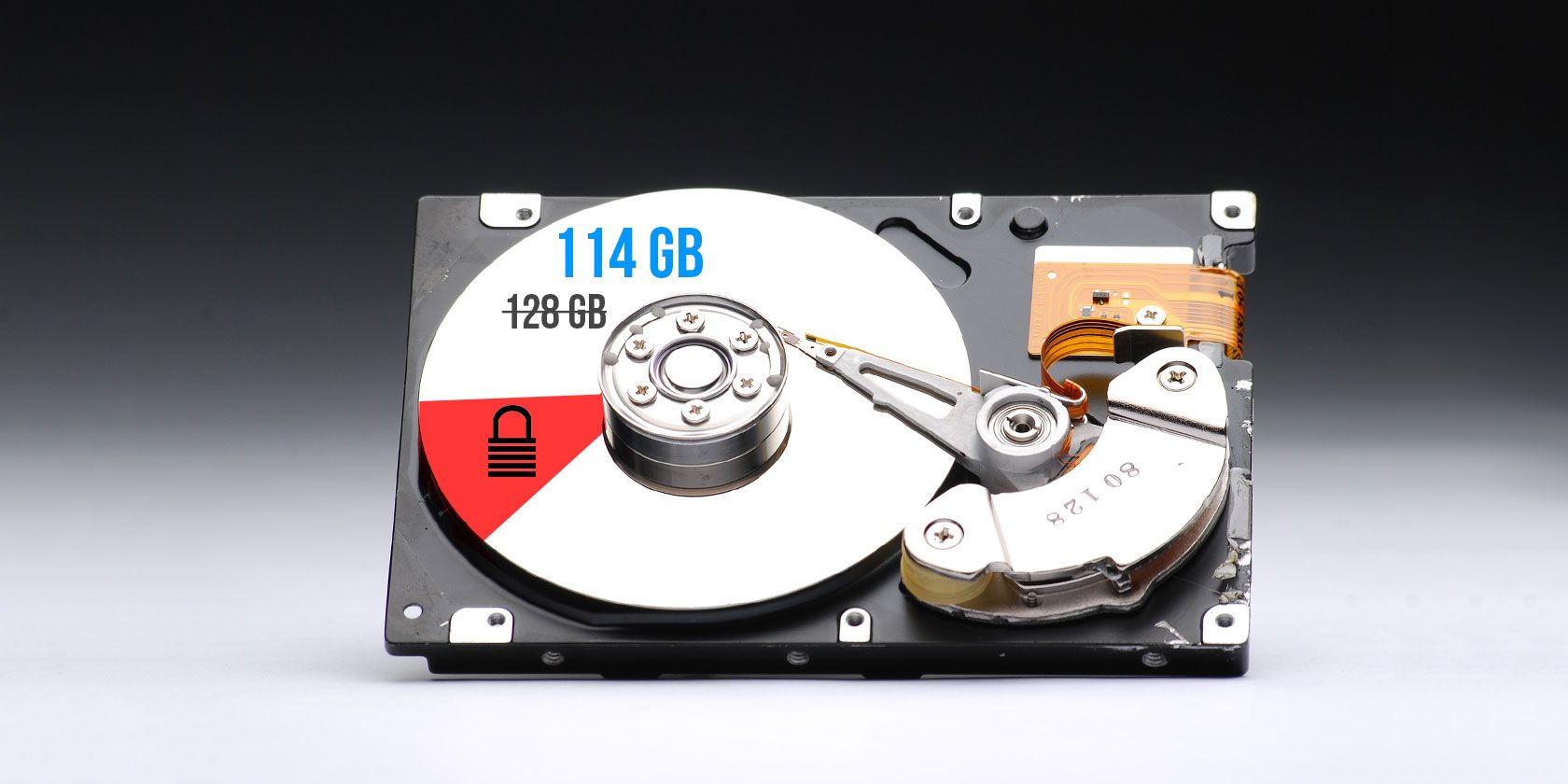
How many times have you opened up a new computer, phone, or external drive, only to be shocked when you realize it doesn’t have as much storage space as it said on the box? That 512GB SSD might actually only hold 477GB, or your 64GB iPhone might only have room for 56GB of files.
There are a few good reasons why this happens. Let’s take a look at why advertised space isn’t usually the same as actual space.
The Operating System and Pre-Installed Apps
The most basic reason that you don’t have all the disk space usable is that there’s already some data present when you buy it. This isn’t the case for removable disks like flash drives or SD cards, but is a major factor with phones and pre-built computers.
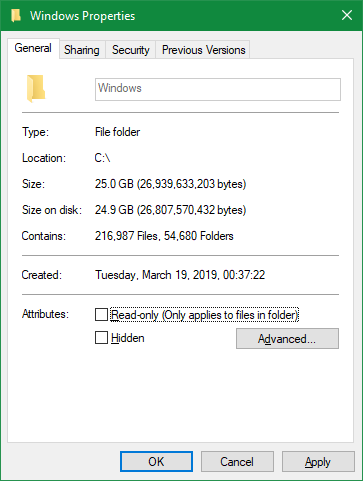
When you buy a computer, the operating system (such as Windows or macOS) takes up a large chunk of space. These protected OS files are necessary for the system to run as intended, so there’s no getting around them.
As an example, on my system, the C:\Windows folder takes up 25GB. That’s roughly one tenth of the entire disk space.
However, it’s not just the OS files that take up space out of the box. Most operating systems include extra apps that you may or may not want. This includes everything from Windows 10 bloatware to useful built-in macOS apps like GarageBand.
While they’re not technically part of the OS, they come bundled with it and thus take up room right away. You can usually remove these to regain space; check out our guide to freeing up storage space on Windows 10 for some tips.
How Computers Measure Space
While preinstalled apps are definitely a factor, the biggest reason that you don’t get the full amount of advertised space is because computers measure numbers differently than humans do.
Binary Numbers Explained
Computing uses standard value prefixes, including “kilo” for thousand, “mega” for million, “giga” for billion, “tera” for trillion, and so on. For a primer on these, we’ve looked at how many gigabytes are in a terabyte and more.
People, including hard disk manufacturers, use the decimal system, which measures numbers with a base of 10. Thus, when we say “500 gigabytes,” we mean 500 trillion bytes.
However, computers use the base 2 binary system, where all numbers are either 1 or 0. If you’re not familiar, below is a list of the numbers 1-10 written out in binary:
1
10
11
100
101
110
111
1000
1001
1010
As you can see, in binary, 21 represents the decimal value 1, 22 is equal to 2, 23 equals 4, 24 is the same as 8, and so on. Each new digit’s place in binary increase the number’s value by one power of two. 210, then, equals 1,024.
Binary and Decimal Measuring
Now we know why computers use 1,024 instead of 1,000 to define these common prefixes. To a computer, one kilobyte is 1,024 bytes, not 1,000 bytes as it is to people. This compounds as you move up the scale, so one megabyte is 1,024 kilobytes, and one gigabyte is 1,024 megabytes.
To see how this affects you, say you buy a 250GB external SSD. That disk contains 250,000,000,000 bytes, but the computer doesn’t display it that way.
Working backwards, we can divide by 1,024 three times (once to convert bytes to kilobytes, again to convert kilobytes to megabytes, and a final time to convert megabytes to gigabytes) to see how much space this actually is:
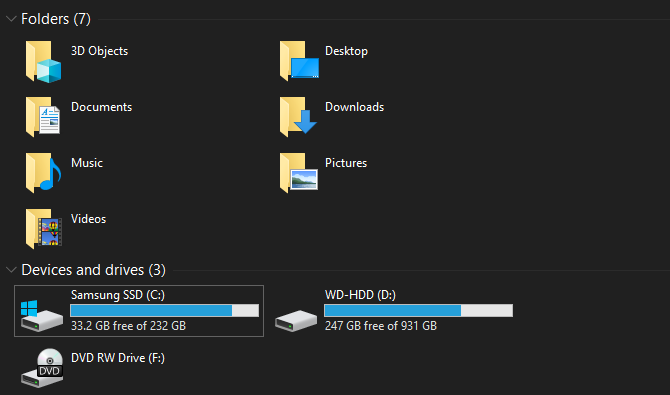
Examining a 250GB drive in Windows shows its maximum space as 232GB, which is exactly what our above calculation found. That’s a difference of about 18GB.
And the larger the disk is, the bigger the difference between measured space and actual space. For example, a 1TB (1,000GB) disk has 931GB of space according to a computer.
Gigabyte vs. Gibibyte
After walking through this, you might wonder why this disparity exists. Why don’t hard drive manufacturers provide an accurate amount of space on their devices? Well, they technically do.
The correct definition of “giga” is a power of 1,000. There’s another name for a power of 1,024: “gibi.” The International Electrotechnical Commission has published standards for measuring data in binary in order to resolve this confusion.
While a kilobyte (KB) represents 1,000 bytes, a kibibyte (KiB) represents 1,024 bytes. It’s the same for mebibytes (MiB), gibibytes (GiB), tebibytes (TiB), and so on.
For some reason, Windows inaccurately uses the “GB” prefix when it’s really measuring in gibibytes. Other operating systems, like macOS, correctly measure 1GB as one billion bytes. Thus, the same 250GB drive connected to a Mac would show it having 250GB of total space.
Aside from the above, another potential cause for a reduction in the total amount of space a drive has is additional partitions.
In case you weren’t aware, you can separate physical hard disks into different logical sections, which is known as partitioning. Partitioning a hard drive allows you to install two different operating systems on one disk, among other uses.
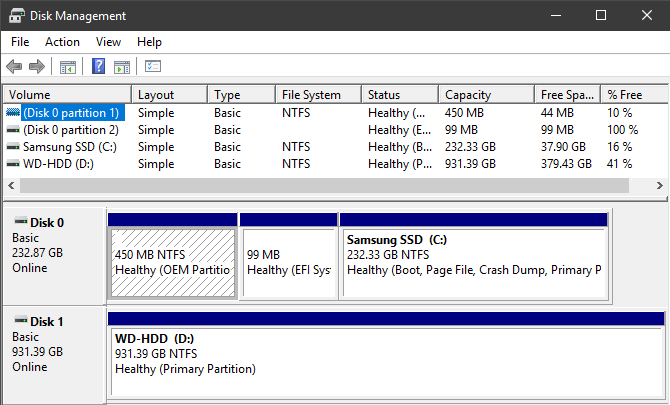
When you buy a computer off the shelf, the manufacturer often includes a recovery partition on the disk. This contains data that allows you to reset your system in case of a serious problem. Like any other files, they take up space on the drive. But because recovery partitions are often hidden from standard view, you might know not they’re around.
To view the partitions on your drive in Windows, type disk management into the Start menu and click Create and format hard disk partitions. Here you can see each disk on your system and the partitions that make it up. If you see a label of Restore, Recovery, or similar, that’s your recovery partition.
In most cases, it’s possible to erase these partitions and regain that space. However, it’s usually best to leave them alone. Having them makes recovering your system a lot easier, and the small space gain isn’t worth the hassle of recovering your system manually.
Hidden Features That Also Use Space
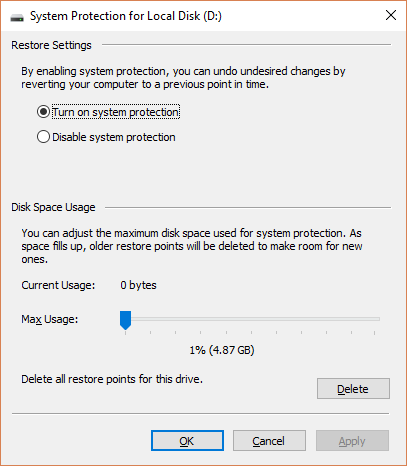
Finally, most operating systems contain features that take up space but don’t exist as actual files. For example, Windows’s Shadow Copy service is used to power both the Previous Versions and System Restore functions.
System Restore lets you return to an earlier point in time if your system isn’t working properly, while Previous Versions keeps copies of your personal files so you can undo changes. Both of these need space to work, of course.
To see and change how much space features that rely on Shadow Copy services use, press Win + Pause to quickly open the System Control Panel entry. From here, click System protection on the left side. In the resulting window, select your drive from the list and choose Configure.
You’ll see a new dialog box that allows you to disable system protection entirely (though we don’t recommend this). Below, you’ll see the Current Usage and can adjust the maximum amount that Windows uses. Somewhere around 10 percent is a good amount.
Now You Know How Computers Calculate Space
The elements discussed account for the noticeable difference in advertised and actual storage space. While there are some other minor factors, such as special blocks in SSDs, these are the major reasons. Knowing them, it’s wise to plan ahead and make sure you always get the amount of storage you need with new devices.
Ubuntu 18.04 LTS “Bionic Beaver” is the current Long Term Support release of Ubuntu. This makes it the number one choice for anyone considering Ubuntu. Still need convincing? Here’s why you should upgrade to or install Ubuntu 18.04 LTS on your Linux PC or laptop.
Ubuntu 19.10 vs 18.04: What You Need to Know
Ubuntu 18.04 LTS (codenamed “Bionic Beaver”) was released in April 2018. As with all Ubuntu releases, the date of release (year and month) is related in the version number.
This is an important version of Linux OS. Every two years a Long Term Support (LTS) release is issued, with five years of support from Canonical. This means you can use Ubuntu 18.04 LTS with support until 2023.
At the time of writing, Ubuntu 19.10 is set for release. However, like other non-LTS releases, Ubuntu 19.10 does not have the same level of support as Ubuntu 18.04. Updates will stop after two years, rather than the five on offer from an LTS.
Keeping this in mind, if you’re wondering if you should upgrade from Ubuntu 16.04 LTS, the answer is “soon”. Support for that LTS release will end in 2021.
In many ways, Ubuntu 18.04 is the core version of the operating system, while Ubuntu 18.10, 19.04, 19.10, and other non-LTS releases can be treated as a mix of interim update and advanced beta.
Want to know more? Here are eight reasons why you should be using Ubuntu 18.04 LTS.
1. Security Enhancements
Primarily, you should upgrade your current Ubuntu version regularly in order to benefit from the latest security patches. These might be for the operating system, drivers, or even (in the case of the Meltdown and Spectre bugs) the underlying hardware.
It’s worth pointing out here that this is true of all operating systems, whether Linux-based, Windows, or macOS. Regular updates will improve your computer’s security. This is why Windows XP users are regularly encouraged to upgrade or switch to Linux.
However, there is a potential security concern that you should be aware of. With Ubuntu 18.04 LTS, Canonical intends to collect data from your computer. But there is nothing personally identifiable in this data.
Instead, it is to establish your computer’s hardware components, what version of Ubuntu you’re running, your location (based on your choice when setting up Ubuntu) and a few other things.
This marks a change from Canonical’s previous attitude to this sort of data collection but is understandable given how flakey figures are for Linux usage around the world. Crucially, this data collection can be opted out of; if you’re upgrading from a previous version of Ubuntu, meanwhile, you can also opt in.
2. GNOME Arrives on the LTS Release
Perhaps the biggest news of the LTS release is GNOME 3.28. Since GNOME replaced Unity in Ubuntu 17.10 (although Unity isn’t quite dead) GNOME has been the default desktop environment (pictured above on Artful Aardvark).
Of course, you don’t have to go with GNOME. Other Ubuntu desktop environments are available, such as MATE.
GNOME on Ubuntu 18.04 LTS marks the first appearance of the new Unity-esque customized GNOME 3.0 desktop on a long-term support release. And it’s a great reason to upgrade Ubuntu to version 18.04.
3. Ubuntu 18.04’s Brand New Icon Set
Despite hopes to the contrary (and a dedicated community project), Ubuntu 18.04 does not boast a fresh new look. However, while the Ambiance theme is hanging around (despite looking a bit tired), some new icons are included in Ubuntu.
Open source icon project Suru has been incorporated into Ubuntu 18.04. These icons were originally seen in the abandoned Ubuntu Touch mobile operating system (now under the control of UBPorts.com).
As noted on the Suru web page (where you can take a look at what’s to come), “Original mobile application icons have been repurposed to theme their GNOME counterparts. Folder and file type icons have been added, based on an unreleased Suru concept. Plus a complete symbolic icon set has been created, with many icons based on the original Suru system icons.”
4. Color Emojis
Sick of Ubuntu leaving you with embarrassing black and white emojis? Upgrading to Ubuntu 18.04 LTS delivers full color emojis to your Ubuntu desktop by default.
You’re stoked, right? I can tell.
The emojis you’ll find in Ubuntu 18.04 LTS are the same open source emojis as found on Android.
5. Ubuntu 18.04 Uses the 4.15 Linux Kernel
Sitting at the heart of every Linux-based operating system is the kernel. This is basically the component of the operating system that talks to the hardware.
As we move away from the release date of Ubuntu 18.04, the v4.15 kernel becomes outdated. To keep things up to date, you might consider updating the Ubuntu Linux kernel.
6. Community-Sourced Default Features and Apps
Take the time on Ubuntu 18.04 LTS to review the collection of community sourced features and apps. Announced in April 2017, the call for suggestions has had tremendous results. Look out for improved NVIDIA GPU and touchpad gesture support, as well as BlueZ implementation for improved Bluetooth functionality.
But it doesn’t end there. The Ubuntu community also suggested new apps to be bundled with the operating system. Consequently, Ubuntu 18.04 LTS includes choices such as Mozilla Firefox, LibreOffice, Kdenlive, and GNOME Calendar.
These tools will not be available in the operating system by default, however. Rather, you’ll have the option to install them as you install Ubuntu.
7. Xorg Display Server Returns to Ubuntu 18.04
Prior to 18.04 LTS, Ubuntu had a tough time, losing both Unity and the mobile variant, Ubuntu Touch. One of the biggest sticking points was the switch to the Wayland display server in Ubuntu 17.10.
While it continues to be earmarked as the display server of the future, the lack of app support for Wayland resulted in users switching back to Xorg.
As a result, Ubuntu 18.04 LTS comes with Xorg restored as the default display server. However, it’s simple enough to switch back to Wayland, via a cog icon on the login screen.
8. Long Term Support Means Ubuntu 18.04 Is Reliable
With new versions of Ubuntu released every six months, it’s important to have a stable option. Long Term Support releases only come around every two years, but they’re vital for many.
Whether you’re a student, business, or gamer, an LTS release of Ubuntu brings with it a degree of stability. You can count on this version of Ubuntu in a way that isn’t possible with interim releases. As a result, LTS versions are more popular, and you’ll find plenty of support for the OS online.
Ubuntu 18.04 LTS offers the reliability you’re looking for in an operating system. That’s worth a lot—yet this operating system is completely free.
Great Reasons to Upgrade Ubuntu Today
So, Ubuntu 18.04 LTS is coming, and you have plenty of reasons to upgrade. To recap: